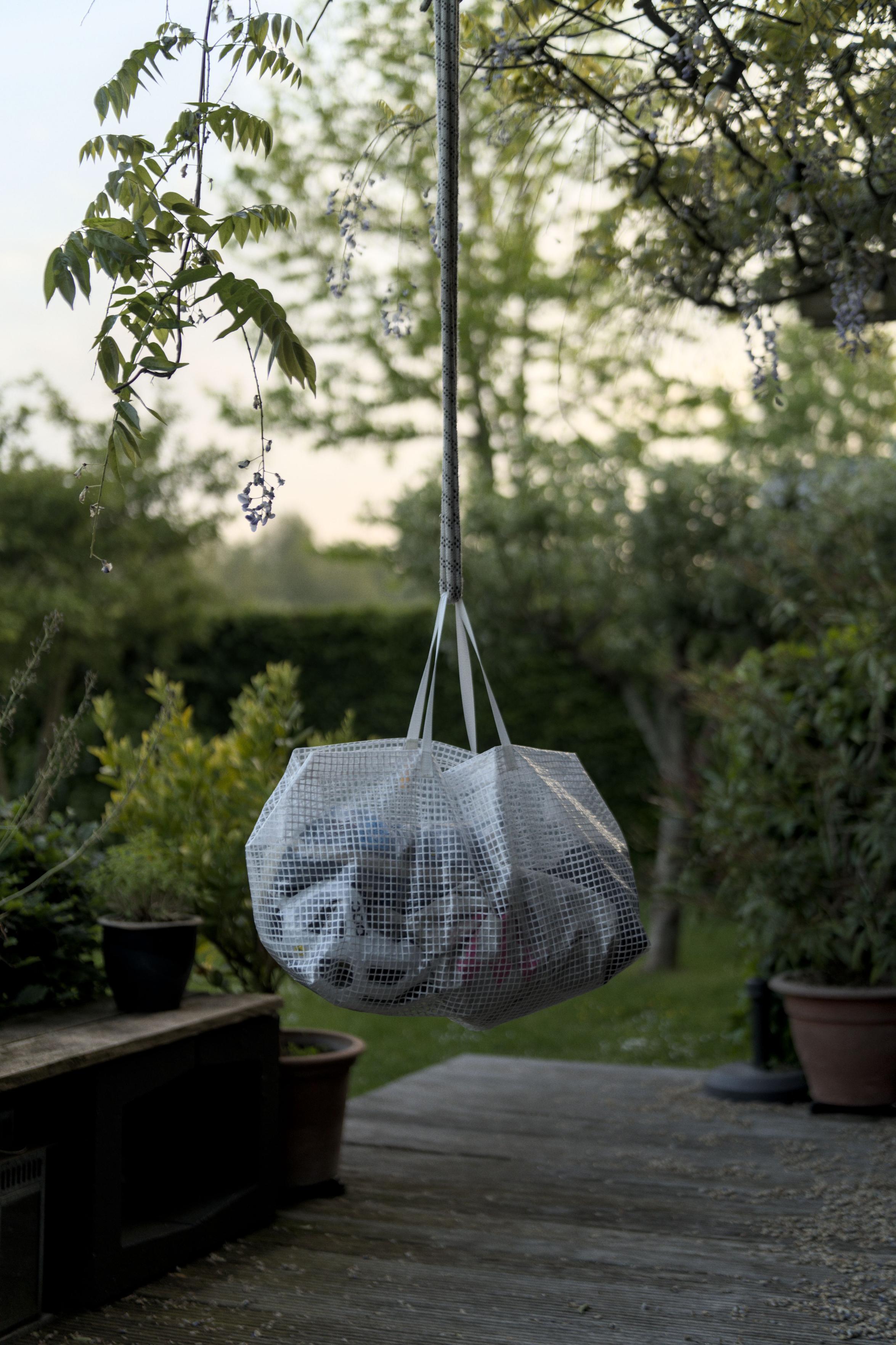
Large bag
- This project first appeared at @ma3ke@hachyderm.io on .
- This article was created on .
I am playing around with a new material. It is a transparent polyethylene foil with a mesh of white reinforcing fibers embedded in it and I believe it is often referred to as leno tarp. Recently, I saw a number of boats around my parent's neighborhood that had covers constructed out of this material. I got very excited about its potential for making bags. After some searching, I managed to acquire a section. The first thing I made out of this material is this large bag.
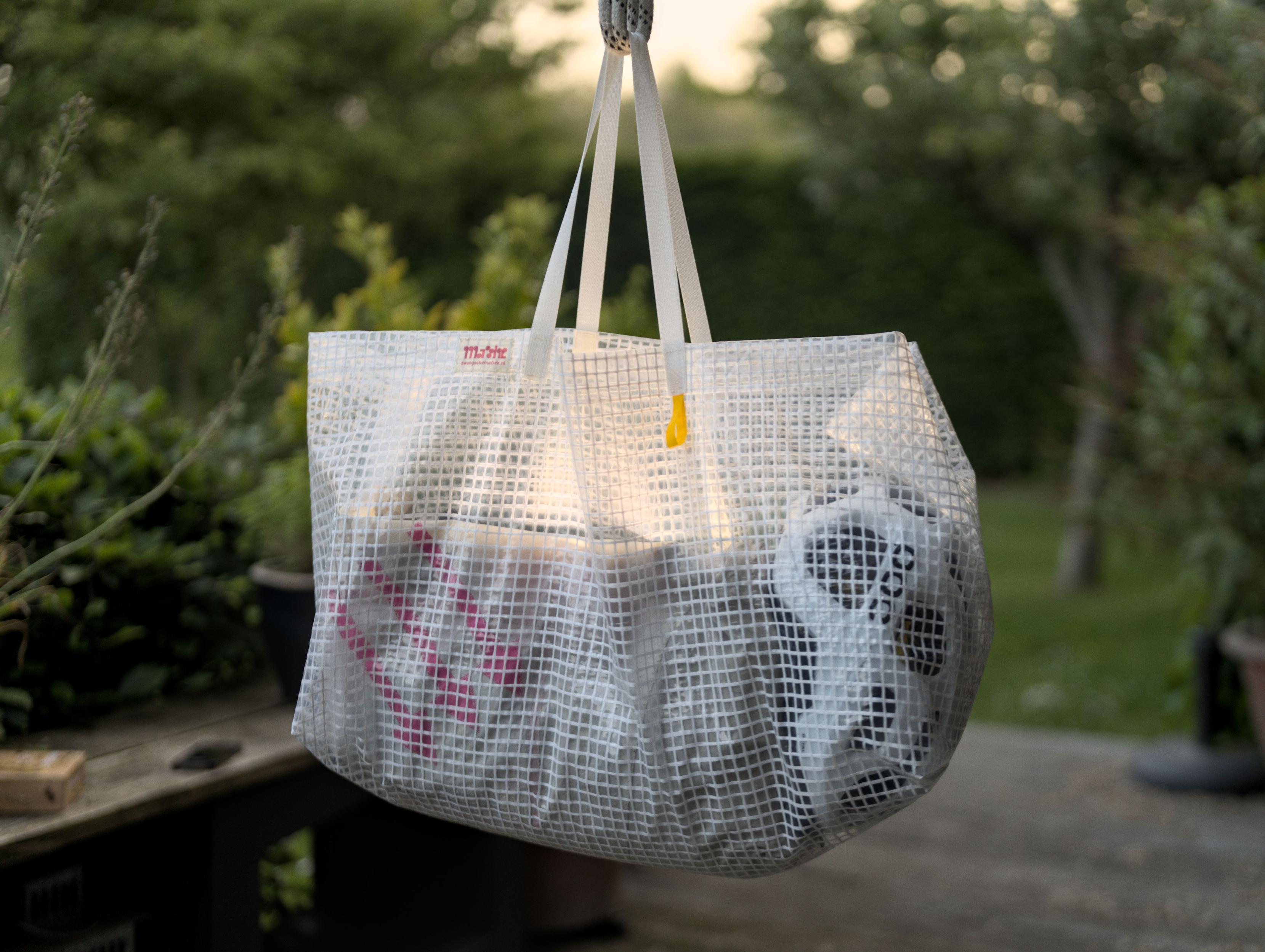
It is a cheap material. The transparent foil itself is entirely watertight but it cannot bear high loads. The reinforcing fibers make it durable by providing strength in tension. What I noticed, is that the weave is not very regular. It appears to wave in parallel lines. This is not a problem, but I did hope that the squares formed by the mesh would be able to serve as some sort of embedded measurement system.
The material does not suit itself to sewing strong seams. The transparent foil is very prone to ripping out when you pull a sharp thread through closely spaced holes. However, sewing right through a section of white flattened fiber does provide additional strength. I decided to aim for sewing at least partially through fibers when possible. If I don't manage to do that due to the position of a seam or due to the fiber line wavering from my intended seam line, I may place an line of stitches right through a section of fiber in the seam allowance. Though I did suspect that a large stitch distance would produce a stronger seam by reducing the harm to the foil, I found that closer stitching appears to be better. I suspect this is because the load is shared over a larger number of holes, reducing the stress on each pass through the foil.
Part of my interest in this material comes from its completely watertight nature. When uninterrupted, its surface is completely sealed. It is a tarp, after all. As with the construction of any watertight garments or bags, the seams are where we need to be careful about water getting in. I found that the seams were indeed rather open to water and I decided to experiment with some ways of sealing these the seam lines. To my delight, simple clear packing tape sticks adheres very well. Especially when you properly press it into place all over the interface, the tape bonds very well. This lets me seal the inside of the seams by folding over the seam allowance and taping it into place. I am curious how this strategy will hold up, but for now I think it is a pleasingly simple and cheap solution.
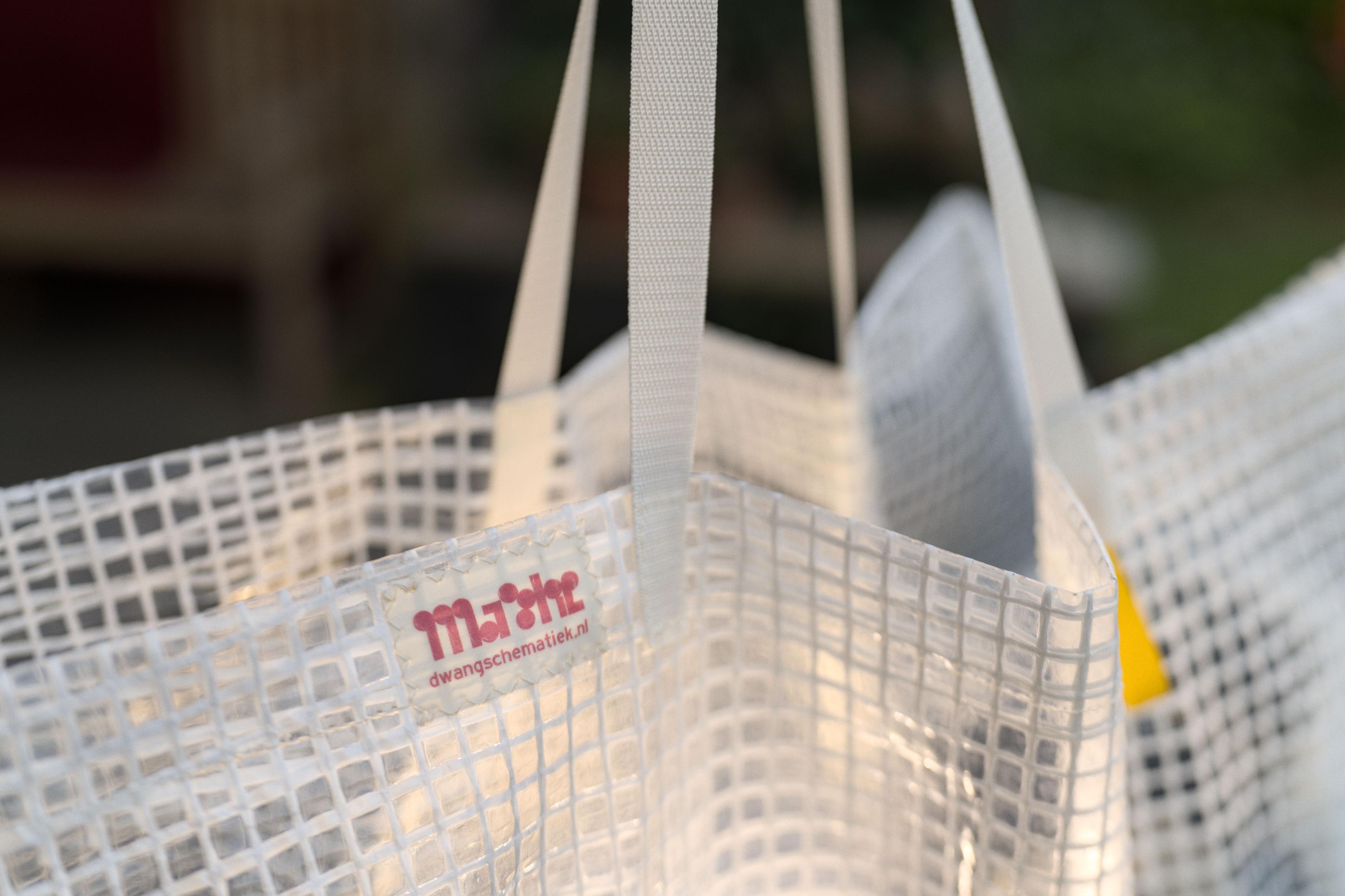
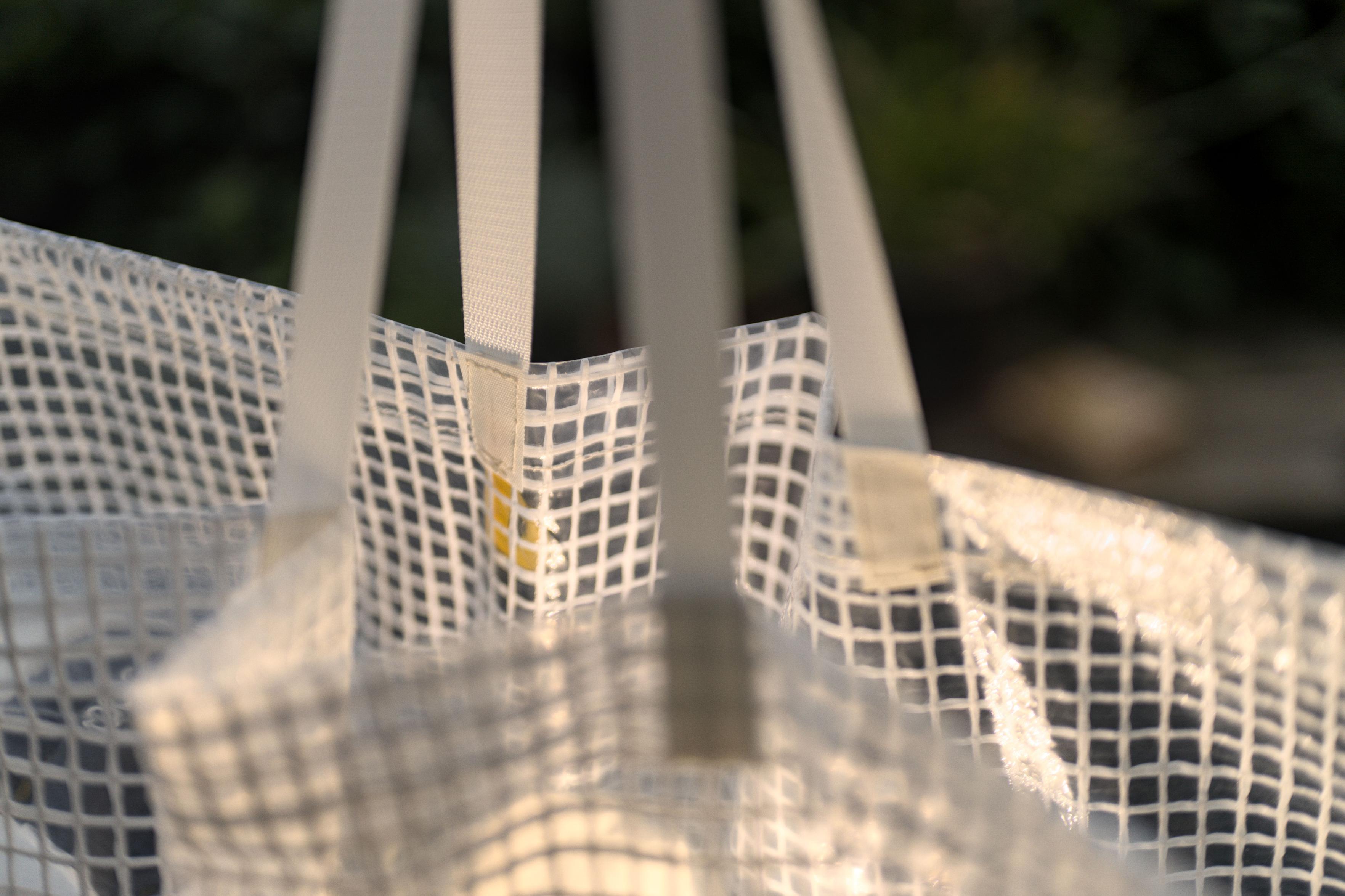
I like how big it is. I have a sailcloth bag that I use all the time, for example during travel. It is large, but smaller than this new bag. Lately, I have wanted a bigger counterpart, so I decided to make this a rather large bag.
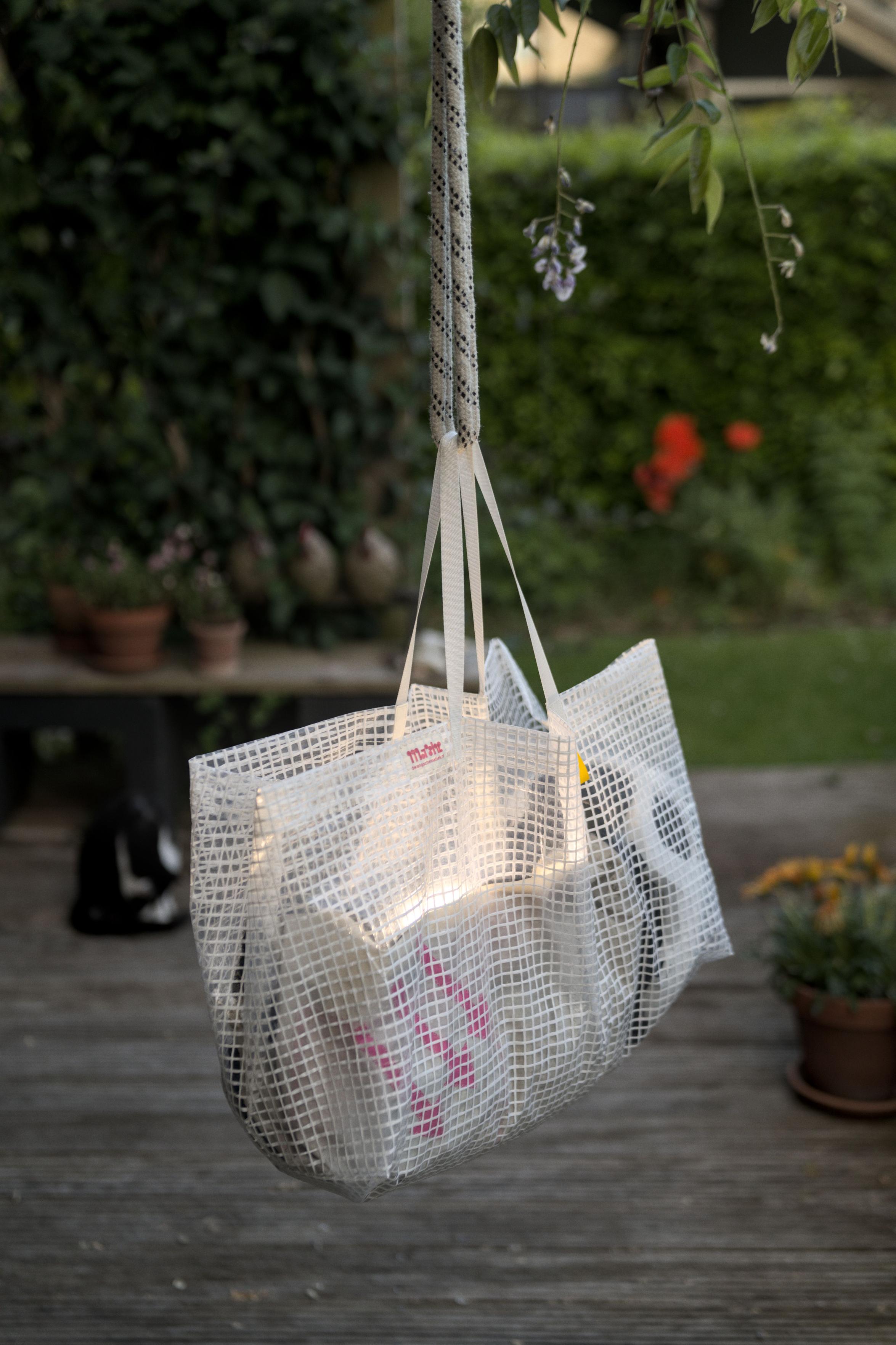
I am excited to continue working with this material. Though I was concerned that it would not be strong enough, I did some testing by carrying increasingly heavy items that has put my at ease about that. I think that while sewn seams in this material may be locally weak, a decently long stitch can withstand a large force just fine.