draadjes

the threads I collected along the way

Saffier

  • This project first appeared at @ma3ke@hachyderm.io on .
  • This article was created on .

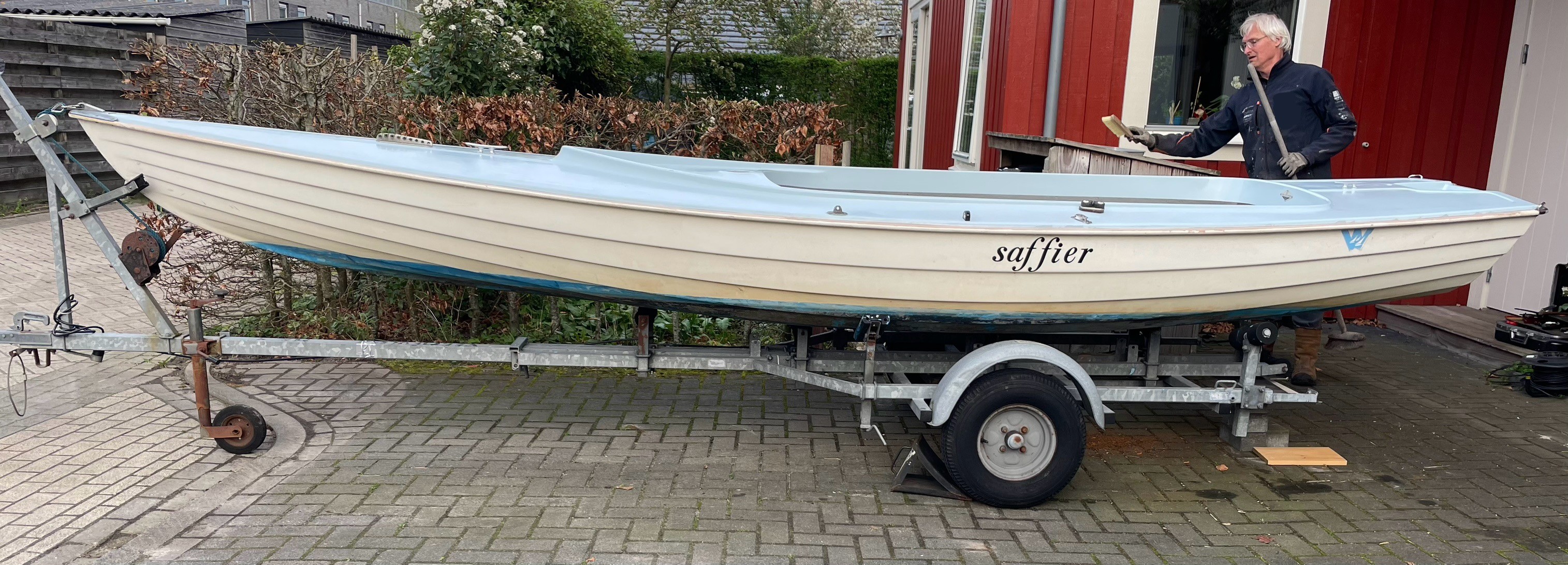
In April 2024, we picked up a new-to-us little sailboat. It's an Oslo jolly named Saffier. Over the next couple of weeks, we took most of it apart to clean it and learn about its quirks.

With the boat still on the trailer, we managed to take off the heavy steel sword. This means we can now carry and turn the polyester hull more easily with the help of a couple more hands.
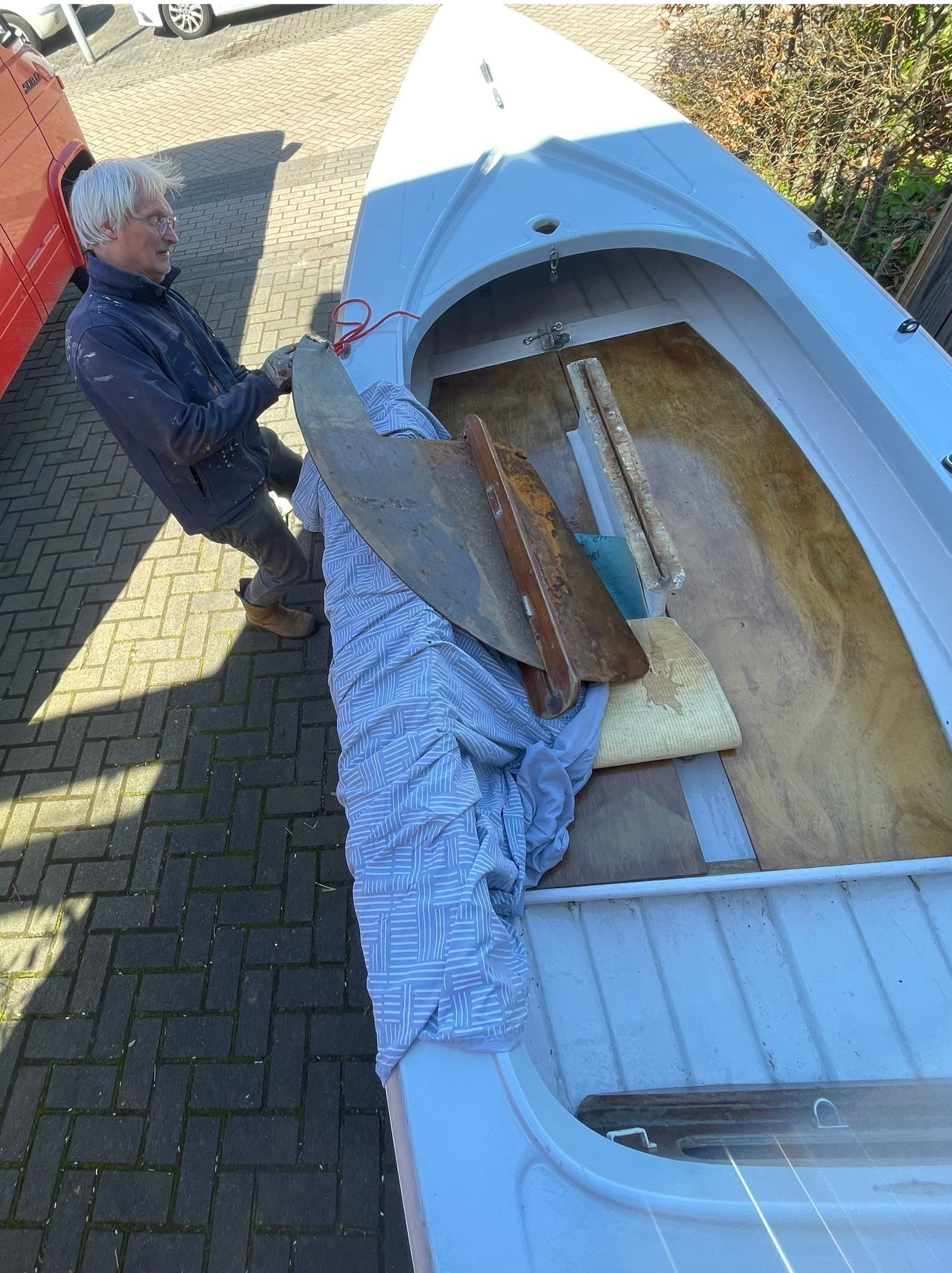
The sword lies on some mats in the boat.
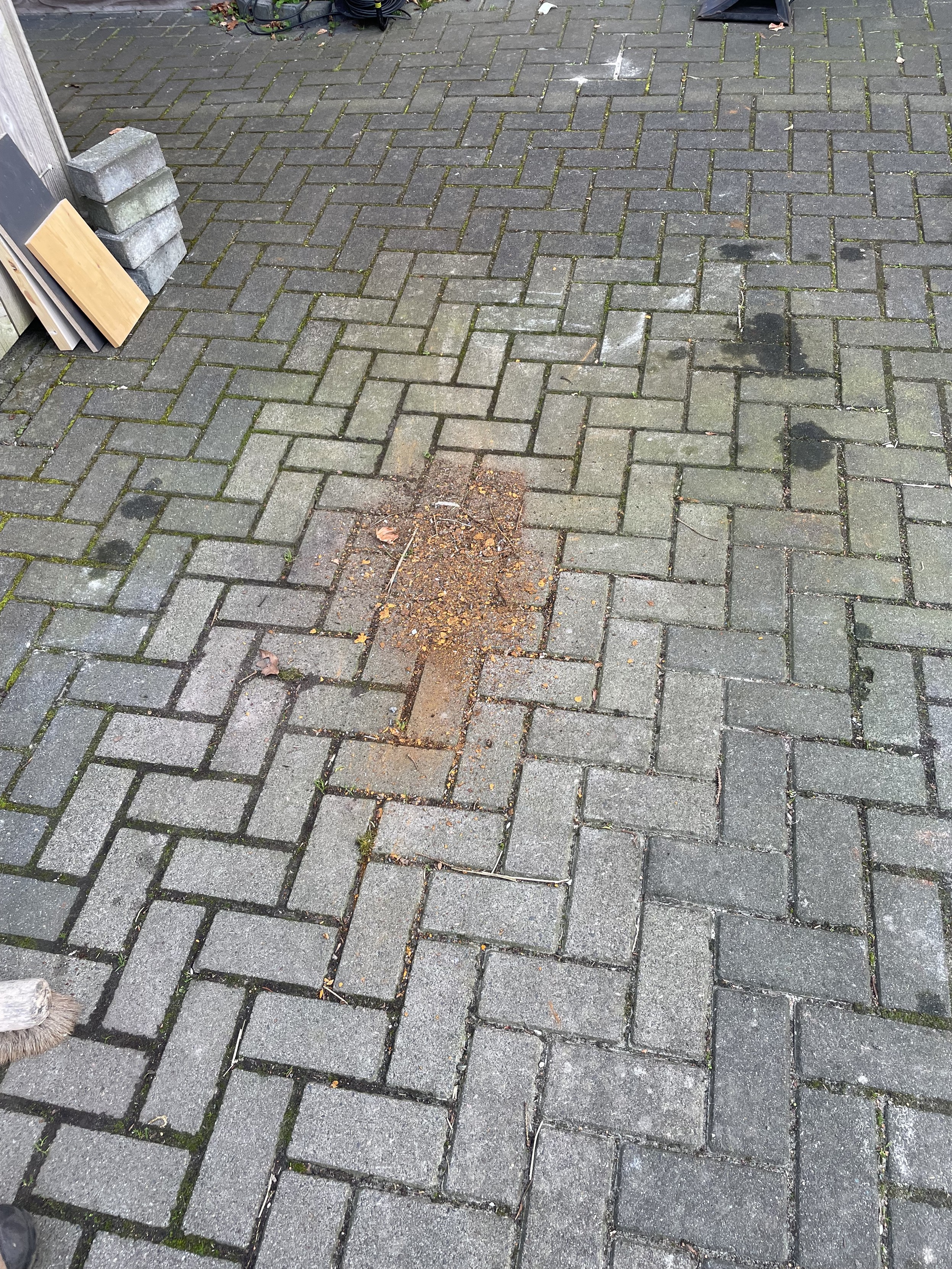
Taking out the sword was quite a tricky process. It is very heavy and the expansion due to the rust made it hard to slide through the slit.
Some of the rust swept together on the ground.
The sword was rather rusty.
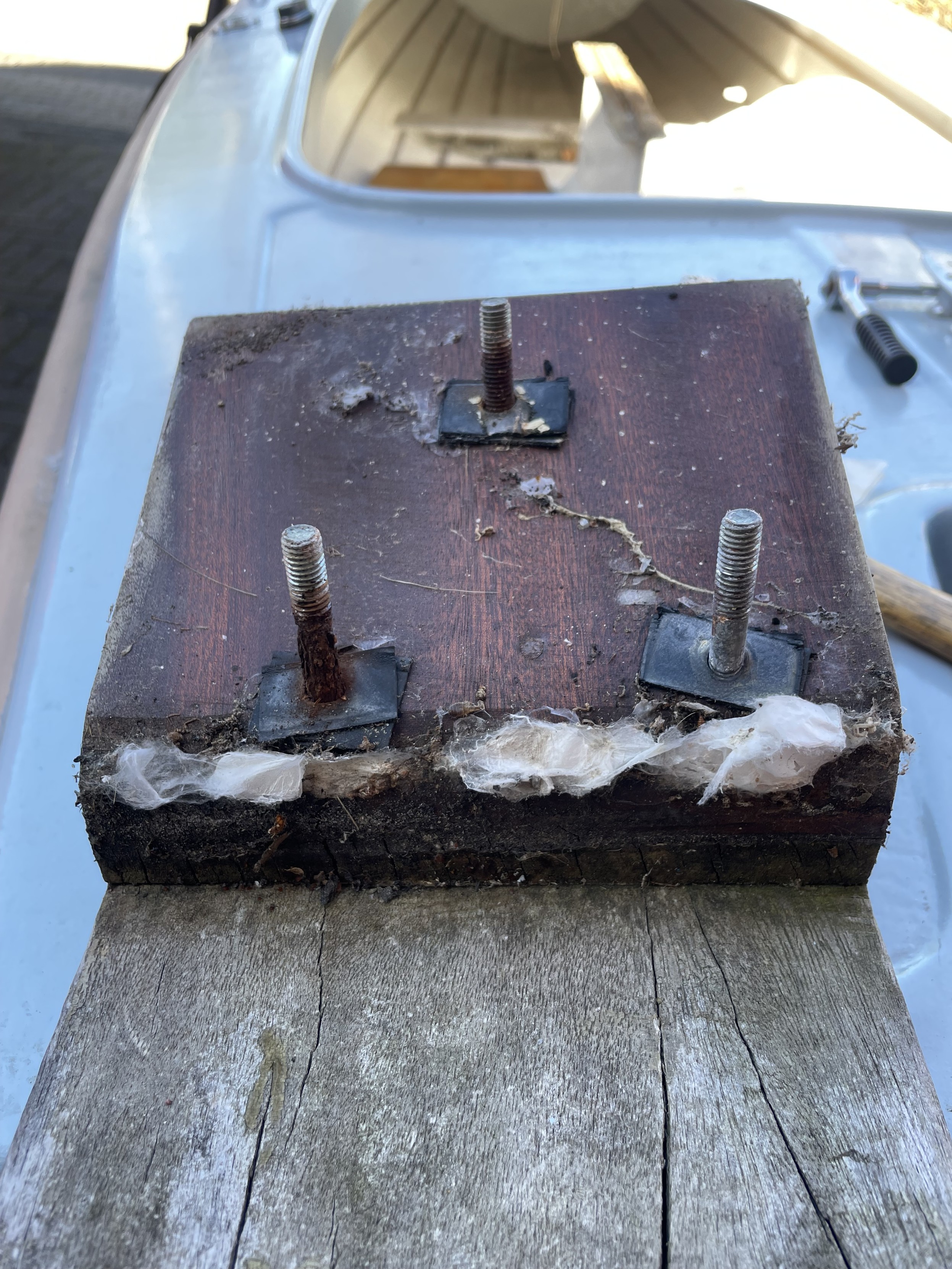
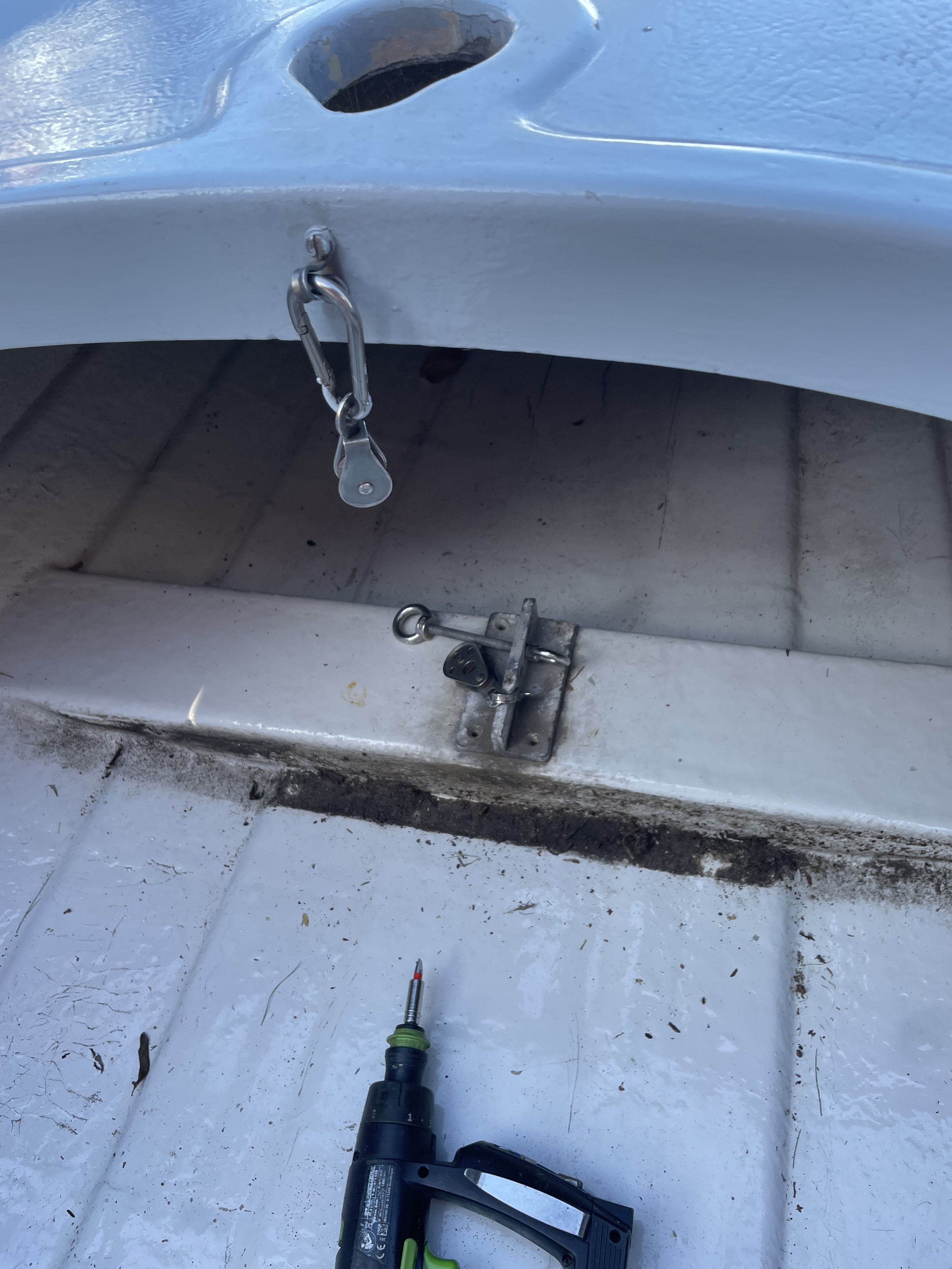
block for attaching a motor, taken off, some of the bolts have started to rust
I'm glad we are taking off all the hardware. This is the block that can hold an outboard motor. Some of the bolts holding it have started to rust through.
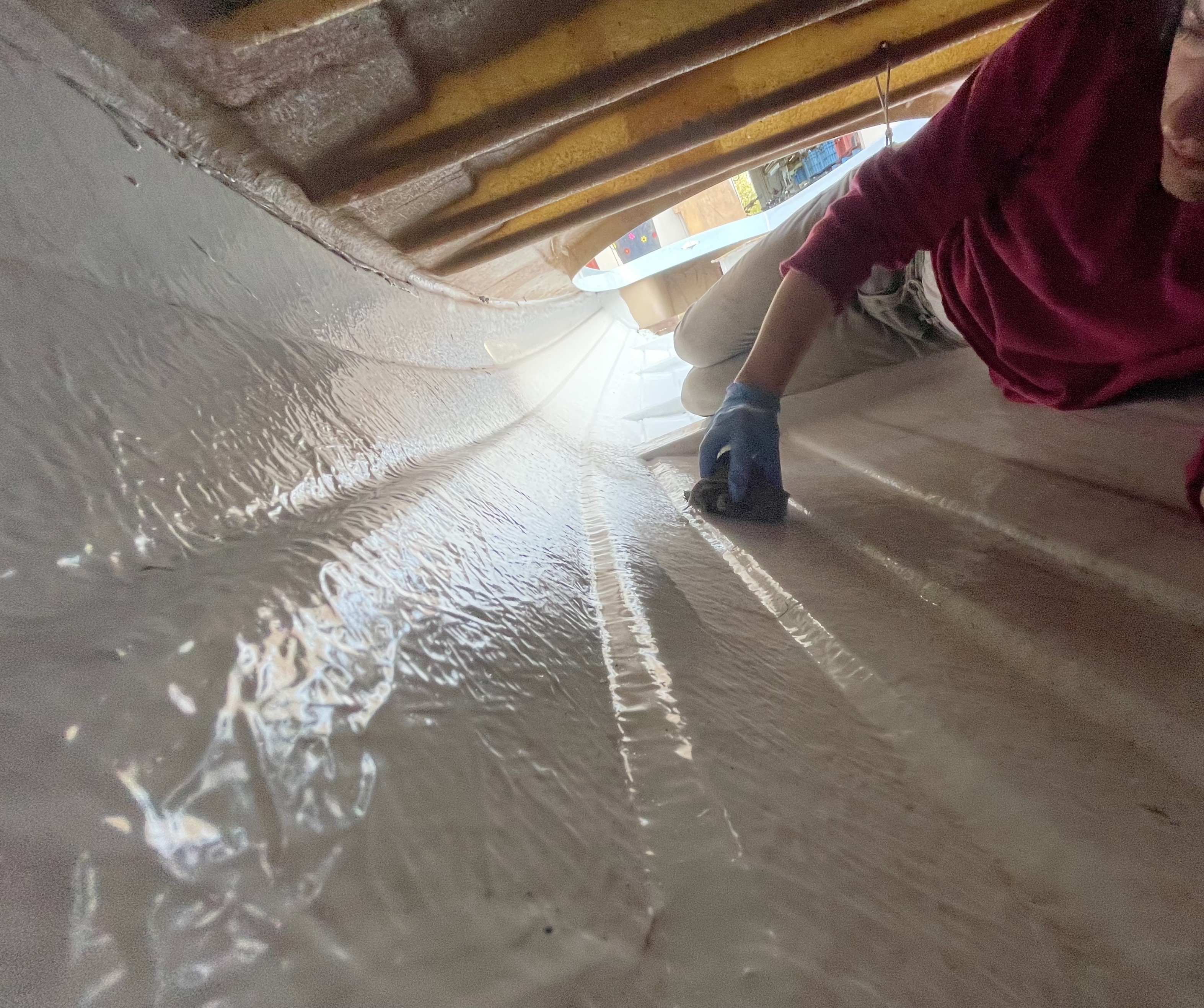
picture of me cleaning the inside of the hull from up in the front cavity
Cleaning the hull.

Quite a number of parts were quite corroded. That is just the age of the boat. It cleaned up nicely.
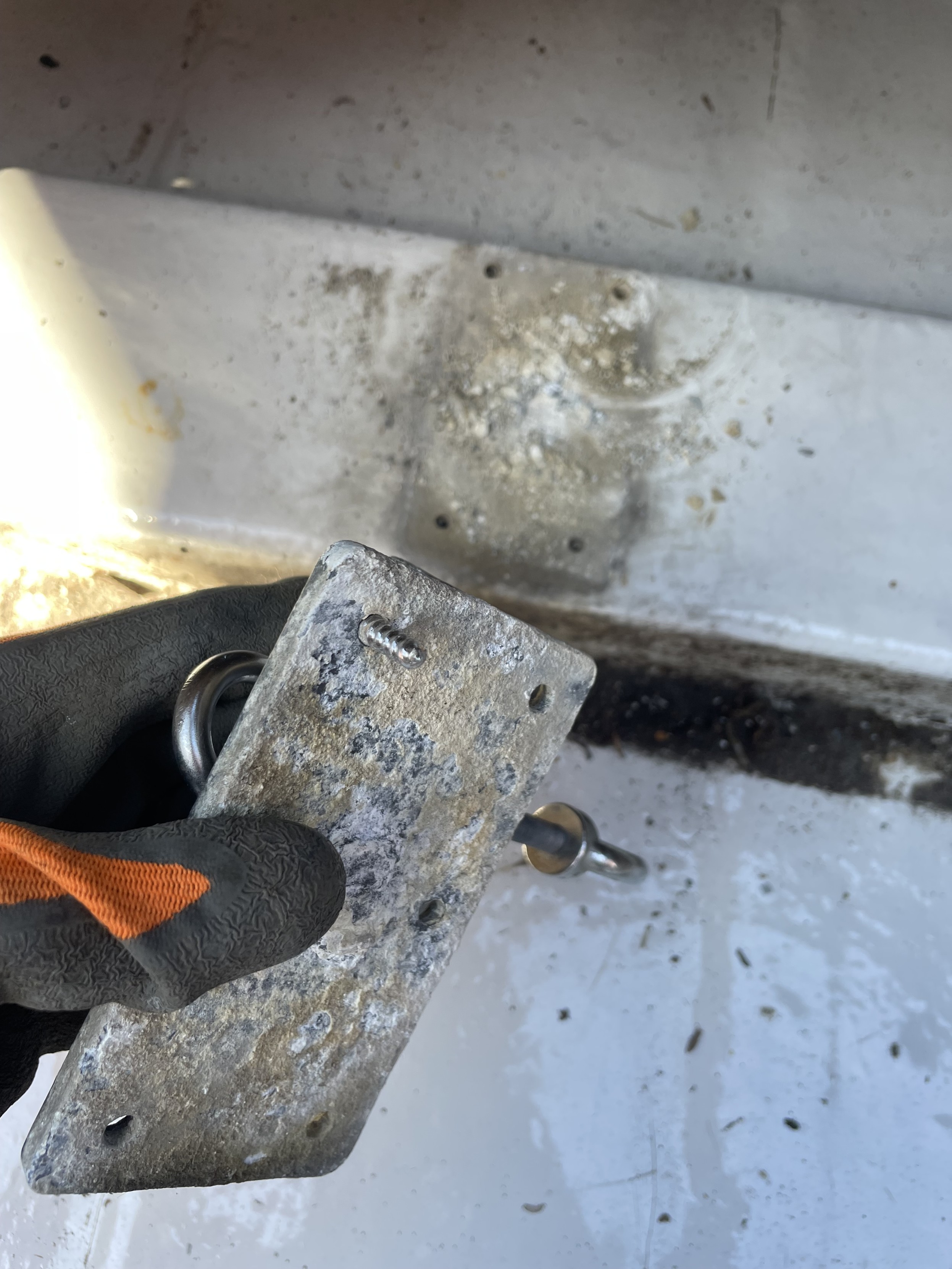
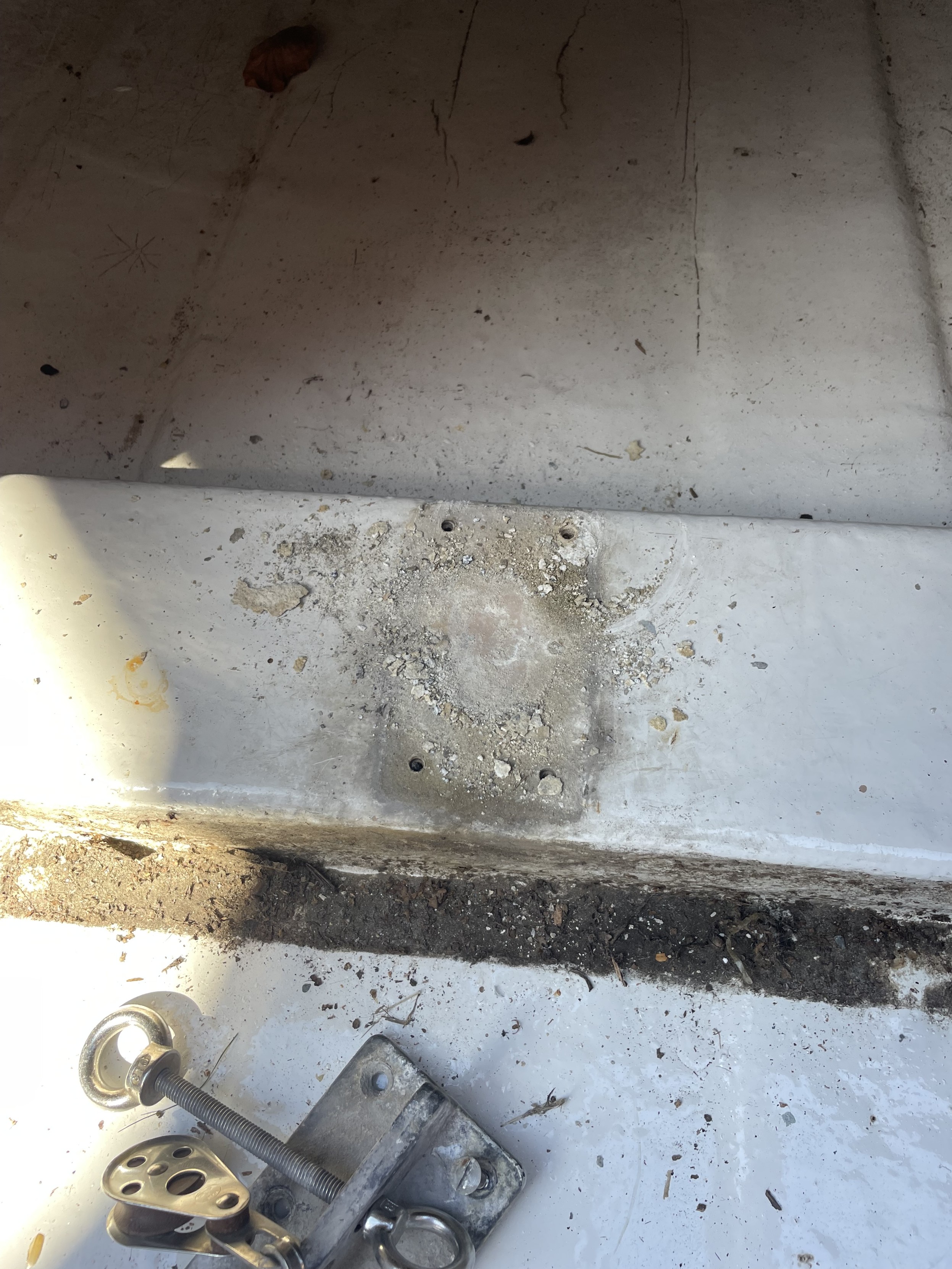
The mast foot plate at the bottom of the hull.
The plate for the foot of the mast is screwed into the bottom of the fiberglass hull.
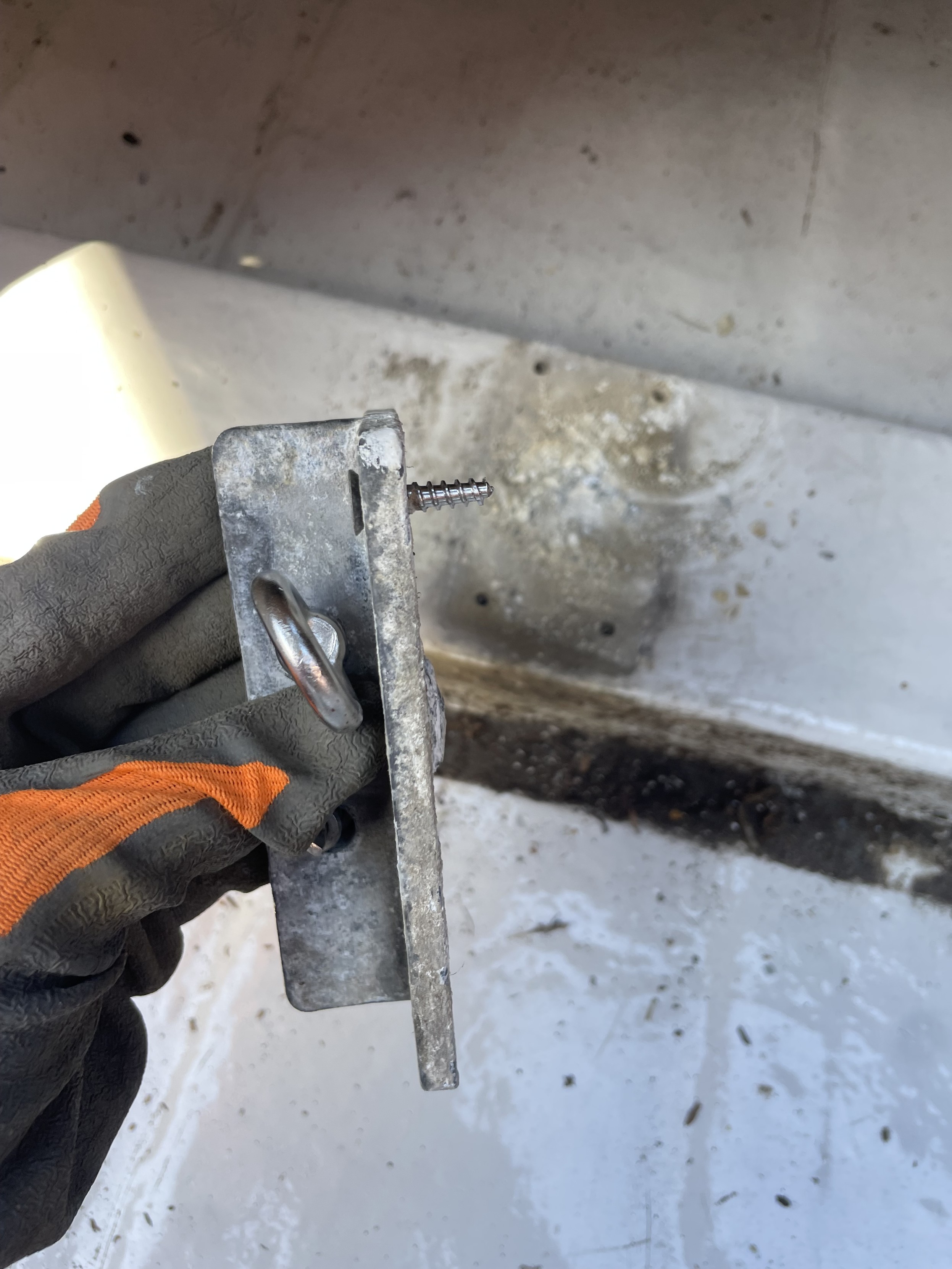
Holding the corroded aluminium plate in my hand.
With the foot taken off, you can really see how much of it has corroded over time.
Side view of the plate.
It still appears in good shape, though.
Powdery corroded residue left on the hull.
This will clean up quite well.

The boat has a lovely, slender shape.
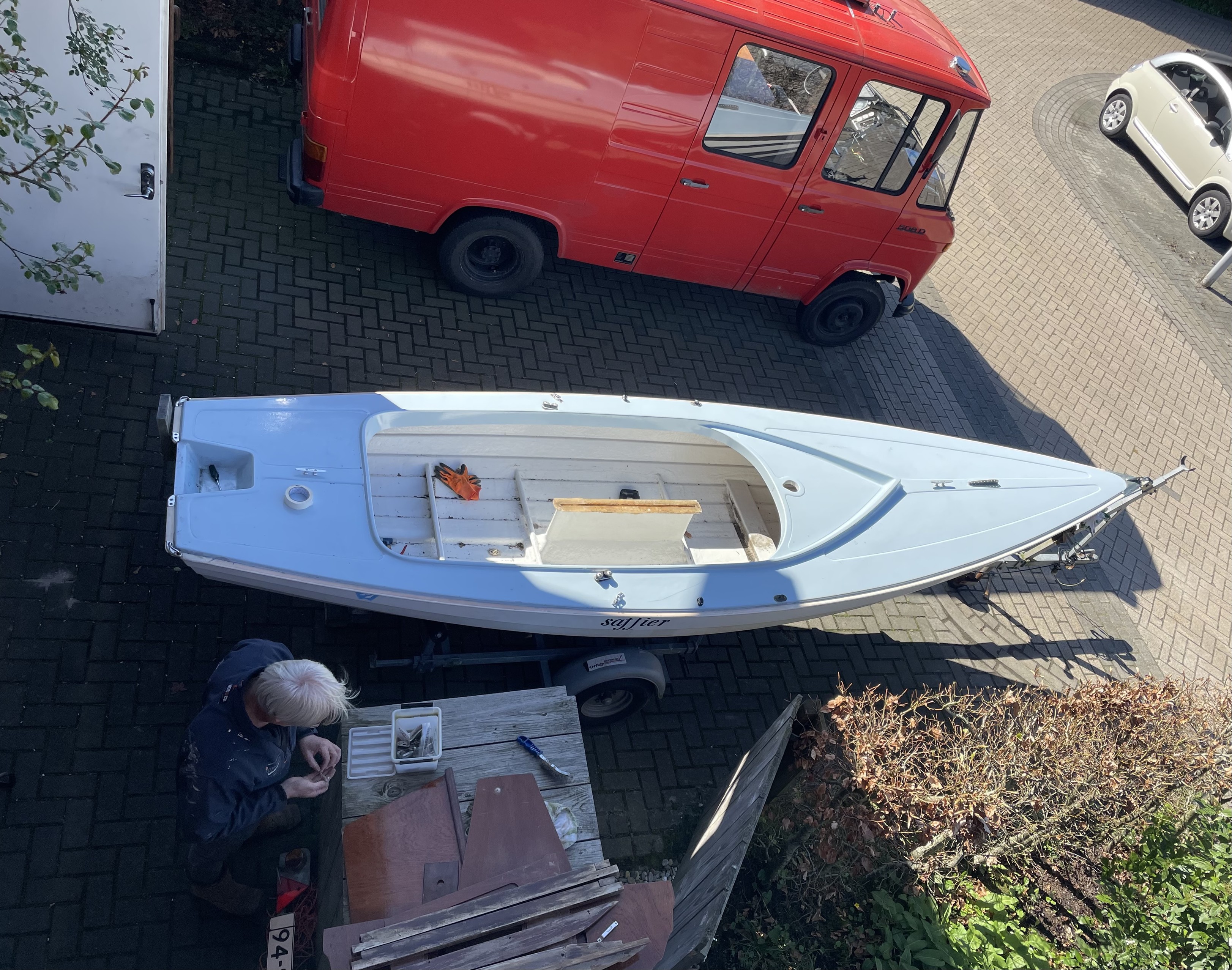
View of the top of the boat.
The deck has a cute light-blue color.
Side view of the boat.
I think the italic lettering is beautiful. Here, you can also very nicely see the clinker-built hull style.

With help from a neighbor, my dad and I turned it over so we can more easily take off the cruft and anti-fauling from the hull.
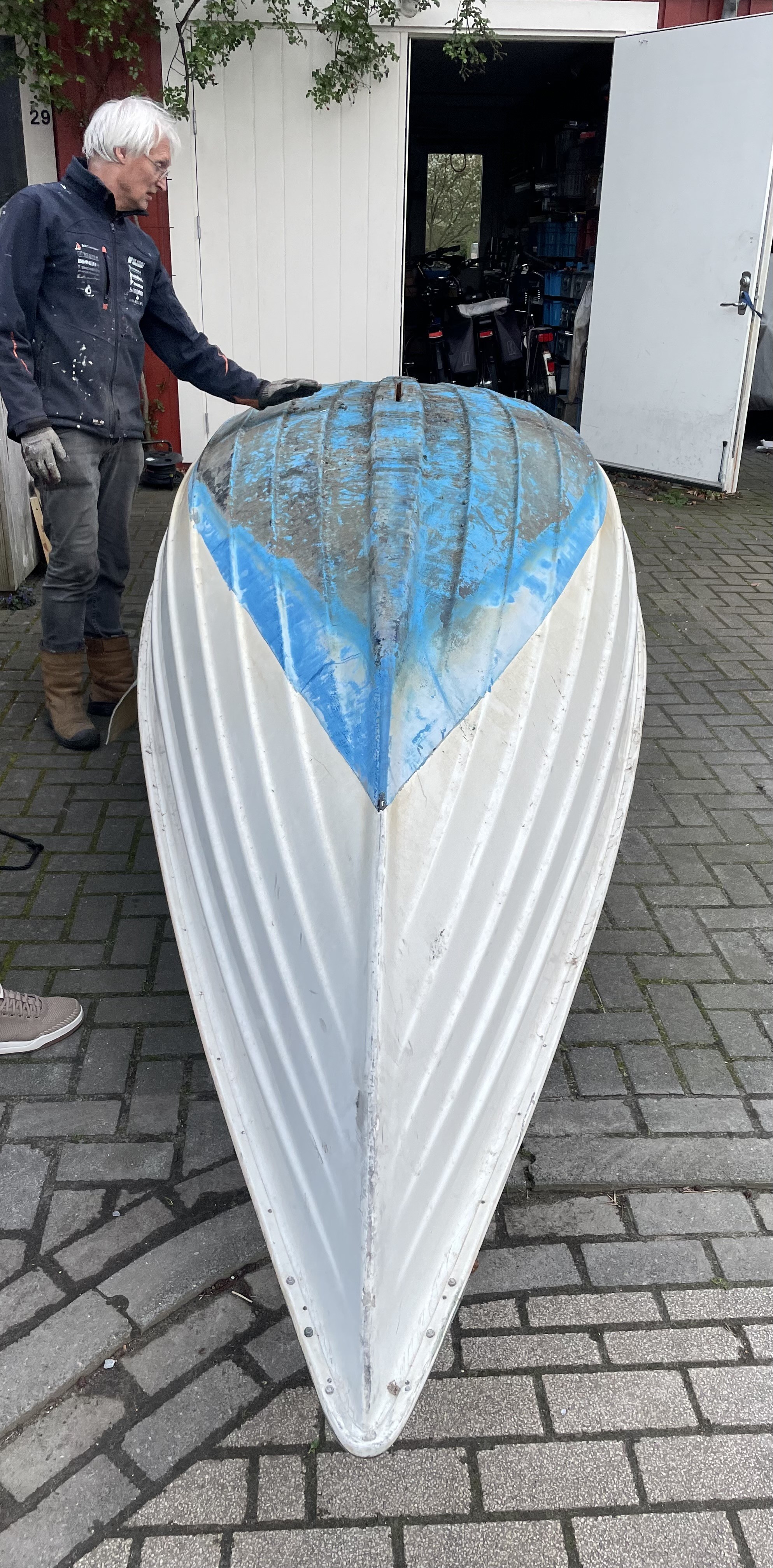
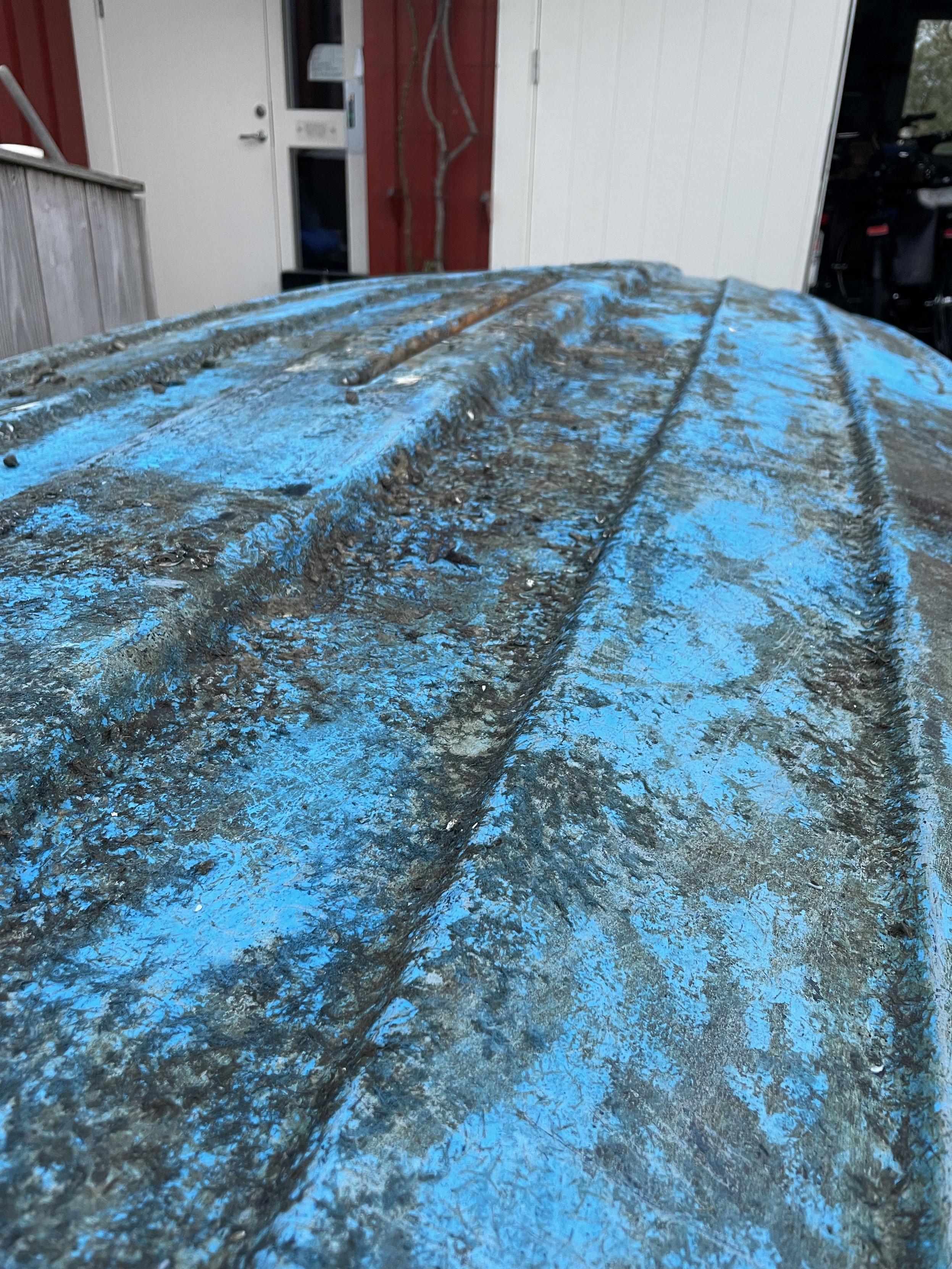
The boat turned upside down, you can see the blue paint on the submerged part of the boat. The cruft on the bottom of the hull.
Time to clean this up.

We started work on scraping the cruft off the hull that evening and got it just over halfway there. After that filled the cracks and gaps in the coating and sand it. Then, we put on a new coat of anti-fauling and we polished and de-stained the unsubmerged part of the hull. It looked great.